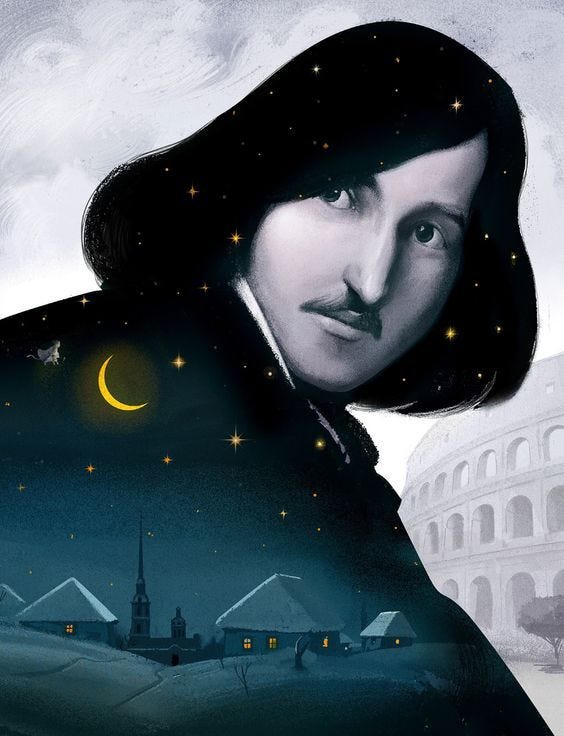
Nikolai Gogol
Fyodor Dostoevsky once said: “We all come out of Gogol’s «Overcoat.»

Yet beyond the books we cherish, the great classic left behind many mysteries and enigmas.
The future writer was born on March 20 (April 1), 1809, in the village of Sorochyntsi in the Poltava (province), in what is now Ukraine.
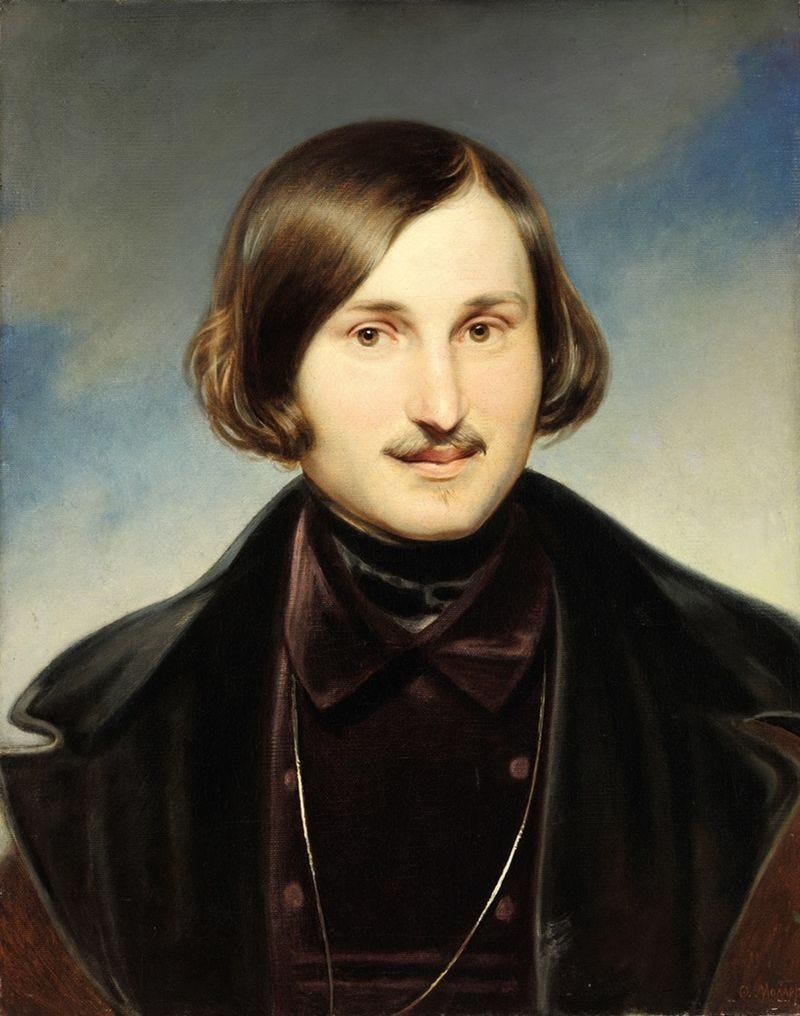
Gogol was the son of a landowner, Vasily Yanovsky, who petitioned the noble assembly to prove his descent from Ostap Gogol. Upon entering the nobility, the family name was changed to “Gogol-Yanovsky,” which the writer later simplified to just “Gogol.”
Gogol’s father was also a writer, though far less famous than his son—he wrote plays for a home theater.
At school, Gogol struggled academically. He was inattentive and often punished with corporal discipline for his lack of diligence. He also found it difficult to master foreign languages. At the same time, he possessed an excellent memory and could quickly retain large amounts of information. His favorite subject was Russian literature.
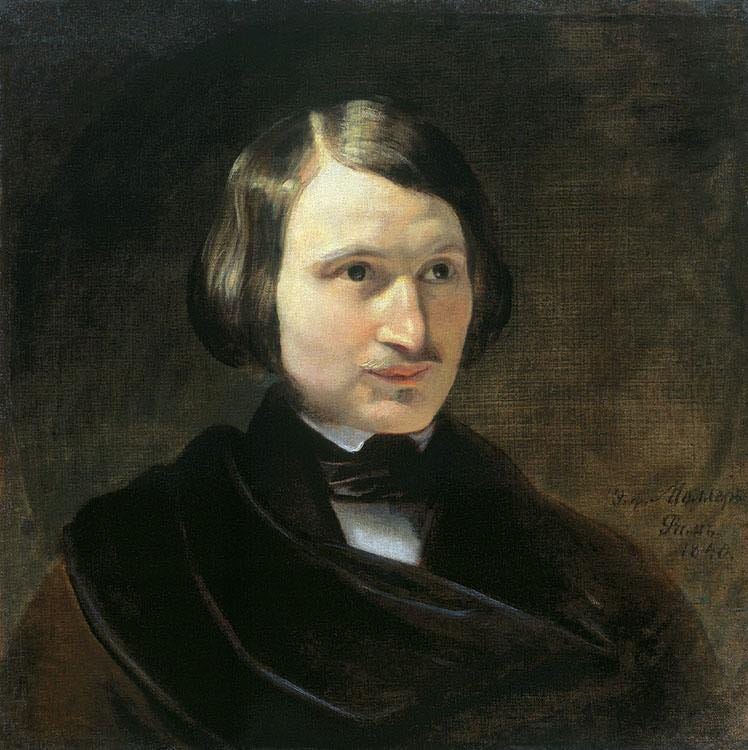
In 1825, when his father died, 16-year-old Nikolai experienced the loss deeply—according to some accounts, even to the point of suicidal thoughts. His father’s death affected not only his emotional state but also the family’s financial situation. After losing his parents, he renounced his inheritance in favor of his sisters.
In 1828, after graduating from secondary school, Gogol moved to the capital. His dreams of a brilliant and rapid career soon collided with harsh reality: he had neither money nor recognition.
In 1829, he began working as a minor government clerk. However, this experience was not wasted—observant by nature, Gogol gathered rich material for his later works about bureaucratic life.

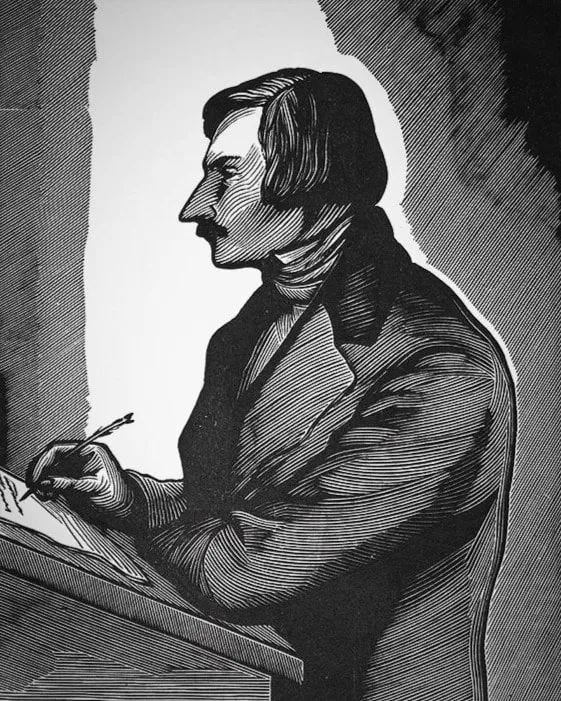
Around this time, he formed connections in the literary circles of St. Petersburg, where he met Alexander Pushkin. The prominent writer and critic Pyotr Pletnyov, professor and rector of St. Petersburg University, actively supported the young author. In early 1831, Pletnyov helped Gogol secure a teaching position at the Patriotic Institute for Noble Maidens, and in 1834, a post as adjunct professor in the Department of History at St. Petersburg University.
Poverty no longer threatened him, though he never became wealthy. However, academic work proved too demanding for Gogol, and he soon resigned from his position.
In 1836, weary of literary life, Gogol went abroad, where he lived for about ten years, occasionally returning home. Traveling across Europe, he lived in Germany, Switzerland, and France, before finally settling in Rome—a city that became almost a second home to him.
There he wrote many of his famous works, including «The Overcoat». Abroad, he also worked on his major creation, the novel «Dead Souls», which he himself called a poem.
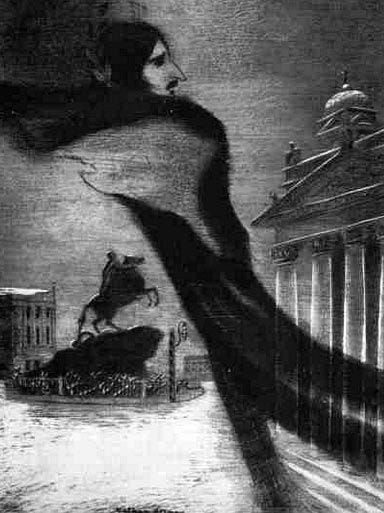
By the 1840s, a turning point occurred in Gogol’s worldview. He turned toward religious mysticism and increasingly believed his calling was to transform life in Russia and improve social morals. He saw his literary work as a form of service to God, and his writings from this period took on a didactic, almost sermon-like tone.
Gogol was often dissatisfied with his own works and destroyed them—most famously the second volume of «Dead Souls», as well as his first published work, released under the pseudonym V. Alov.
Until the end of his life, Gogol’s family consisted of his mother and younger sisters. He never married. His surviving correspondence includes letters to women, and he occasionally mentioned his feelings in letters to his mother, but his relationships were likely purely platonic. He left no descendants and, apart from his books, no inheritance—neither money nor property.
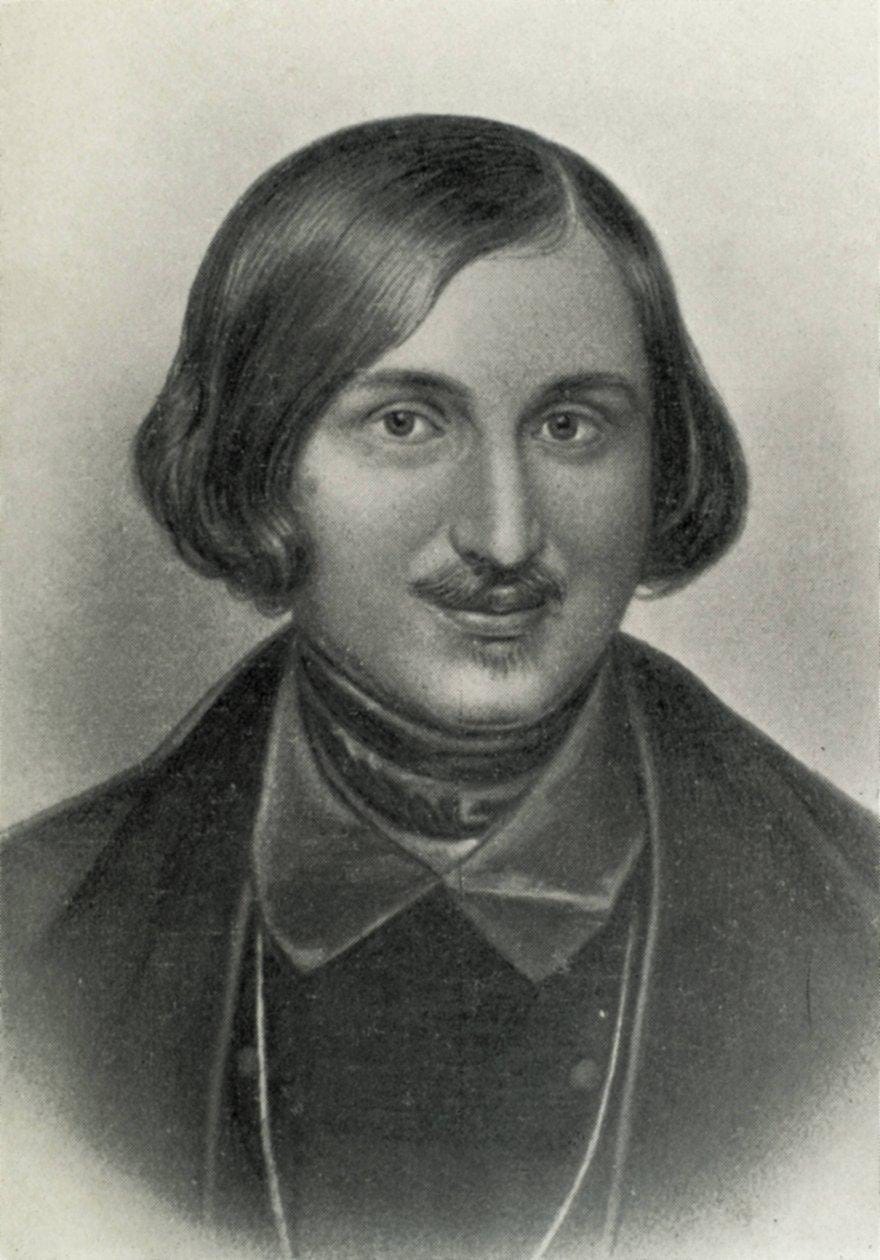
In 1848, Gogol returned to his homeland. His physical and mental condition steadily deteriorated. He abandoned his literary work, was plagued by constant fear, and began to fast strictly. He almost stopped eating altogether and grew progressively weaker. His friends invited doctors, tried to feed and treat him by force, but their efforts were unsuccessful.
Gogol was known for his unusual habits and numerous phobias, including fear of darkness, thunderstorms, strangers, and worms.
While in Rome, he suffered from malarial encephalitis. After this illness, he developed a fear of being buried alive. From then on, he slept only sitting upright and asked his doctor to find a remedy for his fear.
He also had unusual hobbies, including drawing, cooking, and sewing. Gogol had the peculiar habit of always walking on the left side of the street.
In addition to thunder and lightning, he feared being buried alive and was uneasy around unfamiliar people—if a stranger appeared in a group, he would try to leave as quickly as possible.
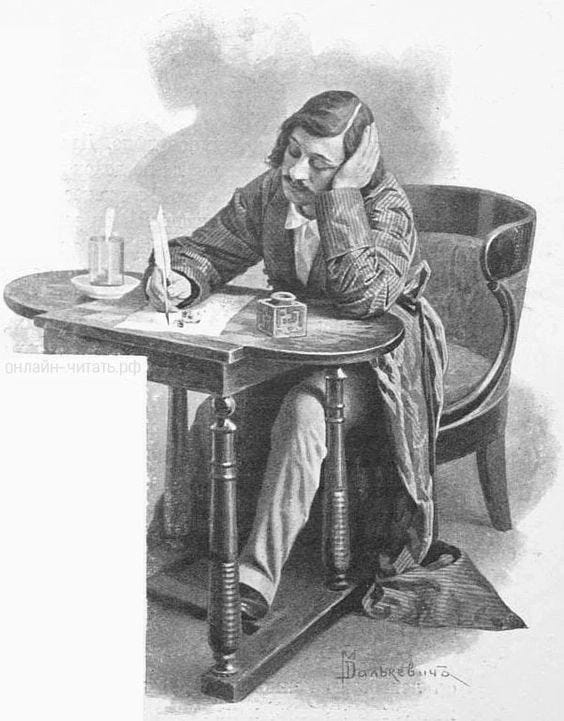
Gogol’s death remains a mystery, with various theories about its cause. He died on February 21, 1852. The exact cause of death has never been established. Hypotheses include mental illness (such as depression or schizophrenia) leading to self-starvation, gastrointestinal diseases, and even poisoning caused by improper medical treatment in his final days.
Gogol’s work has had a profound influence on world literature.